
With the competition for student attention growing fiercer each year, higher education institutions must evolve their approach to recruitment and engagement. The ability to increase student enrollment depends on a smart blend of technology, personalization, and proactive communication. Here are six proven strategies that, when combined with the right tools like a CRM for student enrollment, can help institutions attract, convert, and retain more students, both domestic and international.
1. Respond Promptly with the Right Information
Studies show that 35–50% of enrollments go to the institution that responds first. When prospective students make an inquiry, they’re often exploring multiple options, and a fast, relevant response builds confidence early in their decision-making process.
By using a modern CRM for student enrollment, institutions can ensure every inquiry receives an automated acknowledgment followed by a personalized follow-up. These systems help admissions teams provide timely, targeted information such as program details or deadlines, reducing friction and encouraging next steps. A prompt and helpful reply sets the tone for your institution’s efficiency and care, significantly helping to improve student enrollment rates.
2. Engage with Students on Their Preferred Channels
Today’s students are mobile-first, and your communication strategy needs to reflect that. Traditional emails often go unread, while mobile channels like WhatsApp, SMS, and push notifications are read almost instantly.
To increase student enrollment, institutions must build multi-channel engagement workflows that meet students where they are. Whether it’s nudging them to complete an application or reminding them about upcoming deadlines, mobile engagement enables real-time interaction. These personalized nudges create a sense of connection, responsiveness, and trust that email alone cannot match.
3. Understand and Act on Prospect Behavior
Not all leads are created equal. Identifying which students are most likely to enroll is essential to focusing your recruitment efforts. With behavioral tracking tools available in most CRMs for student enrollment, institutions can monitor actions like program page views, event registrations, and email engagement.
The more a student interacts with your content, the higher their likelihood of converting. This allows admissions teams to prioritize outreach based on genuine interest rather than guesswork. When follow-ups are guided by real behavior, institutions save time, improve outcomes, and continue to improve student enrollment rates.
4. Identify and Target the Right Audiences
Precision targeting is at the core of effective student recruitment strategies. Institutions that segment prospects based on interests, academic goals, geography, and engagement history are better positioned to deliver relevant and timely messaging.
This approach is especially important for international student recruitment, where students may require additional guidance around visas, finances, or relocation. With a capable CRM for student enrollment, institutions can automate segmentation and tailor outreach, ensuring every prospect receives information that aligns with their needs and context. This level of relevance plays a critical role in helping institutions increase student enrollment across diverse student groups.
5. Track and Optimize Your Campaigns
Successful recruitment is an ongoing process of learning and refinement. Institutions must continuously evaluate what’s working and adjust their outreach accordingly. Tracking metrics such as response rates, engagement levels, event attendance, and application progression offers valuable insight into campaign performance.
A centralized CRM for student enrollment makes it easier to analyze these patterns and optimize messaging, timing, and channels. When institutions act on these insights, they strengthen their student recruitment strategies and steadily improve student enrollment rates.
6. Maintain Engagement After Admission
Securing an acceptance is only part of the journey. Many institutions face the challenge of “summer melt,” where admitted students disengage before the academic term begins. This drop-off often occurs when students feel uncertain or disconnected during the gap between acceptance and enrollment.
Maintaining consistent communication during this phase is essential. Sharing orientation details, checklists, reminders, and student stories helps keep admitted students informed and confident in their decision. Mobile communication and automated workflows ensure support is available without overwhelming admissions teams. This sustained engagement helps prevent melt and ensures efforts to increase student enrollment result in students actually arriving on campus.
How Does Engage2Serve Support Enrollment Strategies?
Engage2Serve enables institutions to implement all six of these strategies through a single, integrated platform. It offers a purpose-built CRM for student enrollment, mobile engagement tools, intelligent segmentation, campaign analytics, and post-admission communication workflows.
By supporting institutions from initial inquiry through enrollment and beyond, Engage2Serve helps teams streamline operations, personalize outreach, and consistently increase student enrollment while strengthening long-term student relationships.
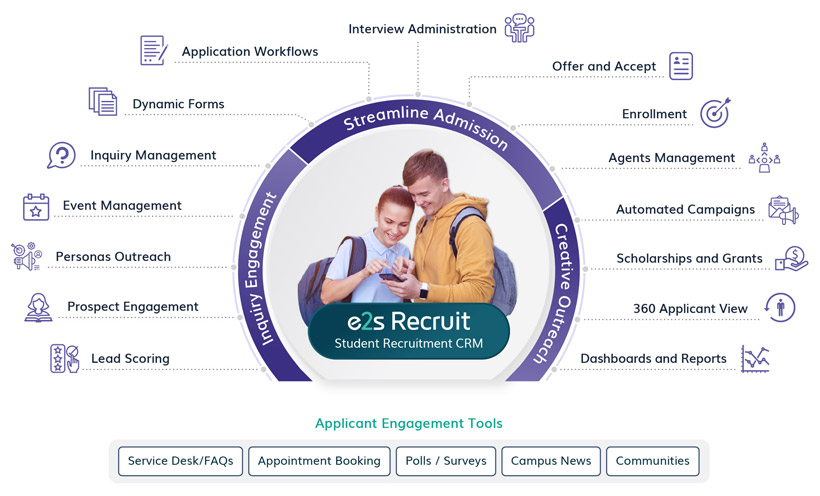
Engage2Serve Inc. is the creator of transformational cloud-based, mobile-first Student Lifecycle CRM products for student recruitment, student success and retention, and alumni engagement.
Frequently Asked Questions (FAQs)
What are the key steps to increase student enrollment?
Key steps include responding quickly to inquiries, engaging students through mobile channels, tracking prospect behavior, segmenting audiences effectively, optimizing recruitment campaigns, and maintaining communication after admission. A CRM for student enrollment helps bring all of these steps together in one coordinated process.
Why is mobile engagement important for recruitment?
Mobile engagement allows institutions to connect with students in real time through channels they actively use. This improves visibility, responsiveness, and relevance, all of which contribute to higher engagement and better enrollment outcomes.
How do I identify which prospects are most likely to enroll?
Prospects who regularly interact with your emails, attend events, or revisit program pages are more likely to convert. Behavioral insights from your CRM help admissions teams prioritize these students and focus outreach where it matters most.
What’s “summer melt” and how can we prevent it?
Summer melt refers to students who accept an offer but do not enroll. Preventing it requires consistent communication, clear guidance, and timely support between acceptance and the start of the term.
How does Engage2Serve support enrollment strategies?
Engage2Serve supports enrollment strategies by combining CRM capabilities, mobile engagement, analytics, and automation into one platform. This allows institutions to manage the full recruitment lifecycle effectively and increase student enrollment with greater consistency and impact

COMMENTS